
Types of Emotional Support Animals: Which Animals Can Be ESAs (and Which Can't)?
By the ValidESA Editorial Team · Reviewed by Dr Anita Sanders · Last updated:
Quick answer (AI snippet)
Almost any domesticated animal can be an emotional support animal. The most common types of emotional support animals are dogs and cats, followed by rabbits, birds, guinea pigs and other small pets. What matters is a licensed clinician's finding that the animal helps with a disability-related need - and local laws, which can ban some species such as ferrets in California.
Key takeaways
- No federal list limits ESAs to certain species; dogs and cats are most common.
- Small mammals, birds and fish can be ESAs; reptiles and unusual animals face more scrutiny.
- Local exotic-pet laws still apply - ferrets are banned in California and Hawaii.
- Landlords can evaluate the specific animal for direct threat or damage.
- Good emotional support animals fit your lifestyle, home and ability to care for them.
What animals can be emotional support animals?
What animals can be emotional support animals? Federal law has never limited ESAs to particular species. An ESA is any animal that, according to a licensed clinician, helps with a disability-related need - so the question "what animals can be ESA" is really about which animals are practical, legal where you live and acceptable in your housing. If you are new to the idea, start with what an ESA animal is.
The most common types of emotional support animals
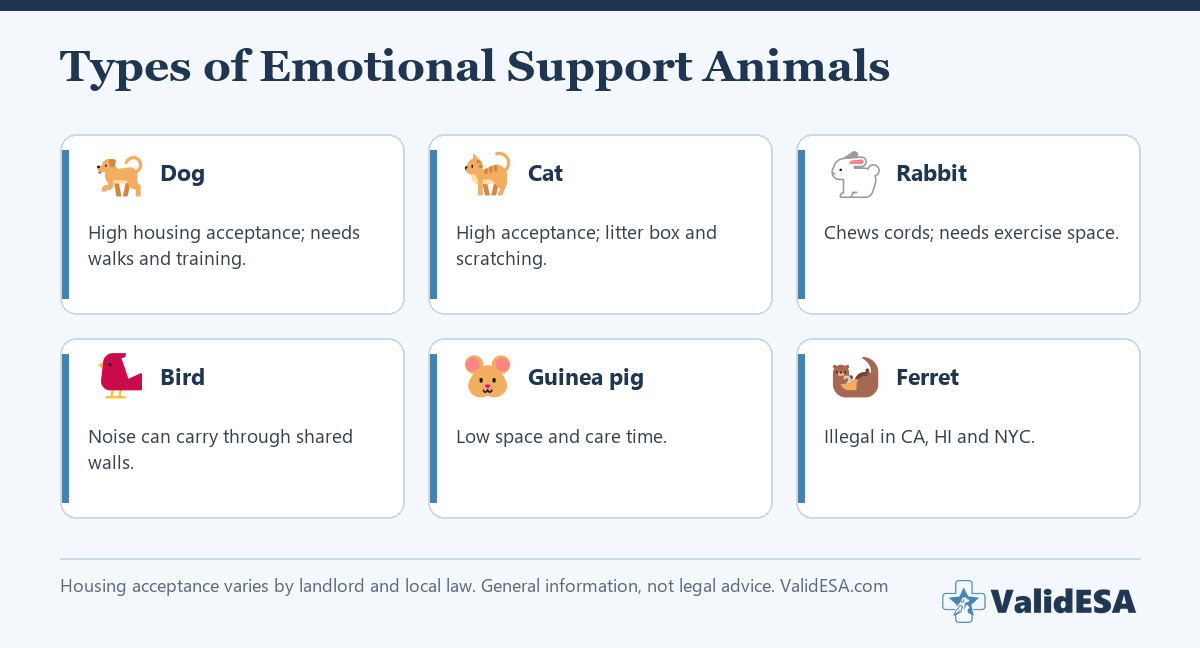
Dogs
Dogs are the most common ESA: they are social, easy to bring outside and respond to routine. Any breed can be an ESA, though some landlords and insurers raise breed questions. See ESA letter for dogs.
Cats
Cats suit apartments and people who want a lower-maintenance companion. Our page on the ESA letter for cats covers cat-specific questions.
Rabbits, guinea pigs and other small mammals
Rabbits, guinea pigs, hamsters, gerbils and rats are quiet, small and well suited to apartments. Rabbits in particular can be affectionate and litter-trained.
Birds
Parakeets, cockatiels and other small birds offer interaction and routine. Larger parrots can be loud, which may matter in shared buildings.
Fish and reptiles
Fish can be calming and easy to house. Turtles, lizards and snakes can be ESAs in principle, but landlords may ask more questions, and local rules on some reptiles apply.
Can ferrets be emotional support animals?
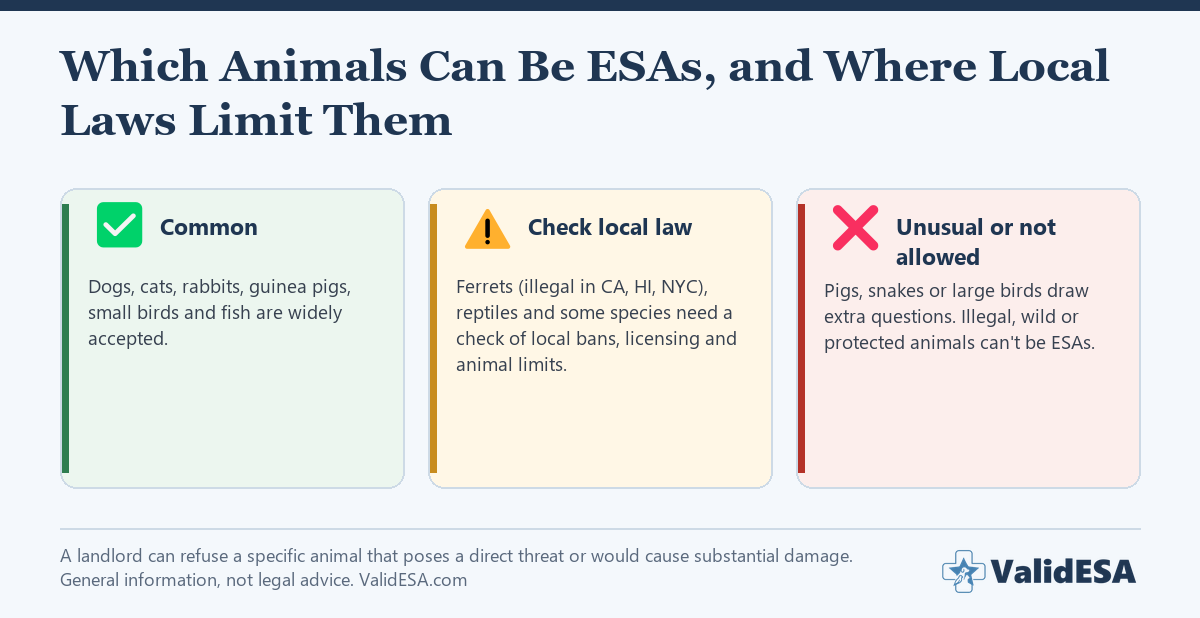
Can ferrets be emotional support animals? Yes, where ferrets are legal to own. They are banned as pets in California and Hawaii and in New York City, and an ESA letter does not override those laws. In other places, ferrets can make engaging ESAs but need daily play, ferret-proofed rooms and vets who treat them.
What animals qualify as ESA under housing rules?
What animals qualify as ESA for housing depends on the person, not the species: the request must be supported by a disability and a disability-related need. HUD's rescinded 2020 guidance described dogs, cats, small birds, rabbits, hamsters, gerbils, other rodents, fish and turtles as "common household animals" and said requests for unique animals needed more support. That notice was rescinded on May 22, 2026, but the distinction still reflects how many landlords and state agencies think about the issue.
Unusual animals
For an unusual animal - a pig, a snake, a large bird - expect the landlord to ask why that particular animal is needed and to check local ordinances. A landlord can refuse a specific animal that poses a direct threat or would cause substantial damage. See can a landlord deny an ESA.
Types of ESA compared
Animal | Space needed | Care time | Housing acceptance | Notes |
|---|---|---|---|---|
Dog | Medium-high | High (walks, training) | High | Breed questions possible |
Cat | Low-medium | Medium | High | Litter box; scratching |
Rabbit | Low-medium | Medium | Medium-high | Chews cords; needs exercise space |
Guinea pig / small rodent | Low | Low-medium | High | Short lifespans for some species |
Small bird | Low | Medium | Medium | Noise in shared walls |
Fish | Low | Low | High | Tank weight limits |
Ferret | Medium | High | Low-medium | Illegal in CA, HI, NYC |
Reptile | Low-medium | Medium | Low-medium | Heat lamps; local rules |
Good emotional support animals: how to choose
Good emotional support animals match your daily life. Ask yourself:
- How much time can you give each day for exercise, play and care?
- How much space do you have, and what does your lease or building allow?
- Do you have allergies, or does anyone you live with?
- What does the animal actually do for you - routine, touch, interaction, calm?
- Can you afford food, vet care and supplies for its lifetime?
- Is it legal where you live?
A clinician can help you think through which animal fits your needs; check if you qualify.
Can you have more than one type of ESA?
Yes, if a clinician supports a disability-related need for each animal. Landlords can consider each one separately. See two emotional support animals.
Practical tips for each type of ESA in rental housing
- Dogs: provide proof of vaccination and license; offer references from past landlords.
- Cats: describe litter and scratching plans to reassure about damage.
- Rabbits and rodents: mention that they live in enclosures and are quiet.
- Birds: note species and expected noise level in shared buildings.
- Fish: check tank weight limits for upper floors.
- Reptiles: describe enclosure, heating and that the species is legal locally.
Size, breed and weight limits
Under the rescinded 2020 HUD guidance, breed and weight limits for pets generally didn't apply to assistance animals. After May 2026, many state laws still bar blanket breed or size rules for ESAs, but a landlord can still evaluate a specific animal's behavior. Insurance policies sometimes list excluded breeds - a separate issue worth checking.
Lifespan and long-term commitment
Animal | Typical lifespan |
|---|---|
Dog | 10-15 years |
Cat | 12-18 years |
Rabbit | 8-12 years |
Guinea pig | 5-7 years |
Small bird (budgie) | 5-10 years |
Ferret | 6-10 years |
Turtle | 20+ years |
A longer-lived animal means a longer commitment, including future moves and new housing requests.
Types of ESA vs therapy and service animals
Types of ESA aren't limited to dogs, unlike ADA service animals. Only dogs (and, case by case, miniature horses) can be service animals; therapy animals visit facilities and have no individual rights. If you need help in public places, an ESA can't provide it.
Matching animal types to common needs
Need | Animal types that often fit |
|---|---|
Daily routine and activity | Dogs |
Quiet companionship in a small space | Cats, rabbits, guinea pigs |
Interaction and vocal engagement | Small birds |
Low-maintenance calm | Fish |
Playful energy | Ferrets (where legal), young dogs |
This is a starting point, not a rule. Your clinician's view of how the animal helps matters more than the species.
Adopting vs buying an ESA
Shelters and rescues have every common ESA type, from dogs and cats to rabbits and guinea pigs, and adult animals come with known temperaments. Adoption fees usually include vaccines and spay or neuter surgery. There is no such thing as a "certified ESA" for sale.
What clinicians consider when you name an animal
Your ESA letter is about your need, but clinicians and landlords sometimes ask about the specific animal. Be ready to explain how that animal helps, whether you already have it, and how you care for it. For a less common species, a short note on its housing, cleanliness and noise can head off objections.
Local rules that apply to every type of ESA
- Licensing (most cities license dogs; some license cats)
- Vaccination requirements, especially rabies
- Leash and nuisance laws
- Bans on specific species
- Limits on the number of animals per household (an accommodation may be needed)
Which animals cannot be ESAs?
- Animals that are illegal to own where you live
- Wild animals or protected species
- A specific animal that poses a direct threat or would cause substantial damage
- Stuffed animals - they are comfort items, not ESAs
Found the right ESA? Check if you qualify for a letter
Conclusion: types of emotional support animals
The types of emotional support animals are as varied as people's needs: dogs and cats lead, but rabbits, birds, small mammals and fish all qualify in principle. Choose an animal you can care for, check local law, and expect more questions for unusual species.
Frequently asked questions
What animals can be ESAs?
Almost any domesticated animal can be an ESA. Dogs and cats are most common; rabbits, birds, guinea pigs, fish and other small pets are also common.
Can a ferret be an emotional support animal?
Yes, where ferrets are legal. They are banned as pets in California, Hawaii and New York City, and an ESA letter does not override that.
What is the best emotional support animal?
The one that fits your needs, home and ability to care for it. Dogs and cats are most common because they are social and easy to house.
Can a landlord refuse an unusual ESA?
A landlord can ask for more support for an unusual animal and may refuse a specific animal that poses a direct threat or would cause substantial damage, or that local law bans.
Can a snake be an emotional support animal?
In principle yes, if legal and supported by a clinician, but expect more questions from landlords and check local reptile rules.
Can a rabbit be an emotional support animal?
Yes. Rabbits are a common ESA choice, especially in apartments, because they are quiet and can be litter-trained.
Do ESAs have to be dogs or cats?
No. Federal law has never limited ESAs to dogs or cats, although dogs and cats are the most common.
Can a bird be an emotional support animal?
Yes. Small birds such as parakeets and cockatiels are common ESAs. In shared buildings, consider noise levels.
Can I have different types of ESAs at the same time?
Yes, if a clinician supports a need for each. A landlord can consider each animal separately.
Sources
- Fair Housing Act, 42 U.S.C. § 3604(f); HUD FHEO-2020-01 (rescinded May 22, 2026)
- California Code of Regulations, tit. 14, § 671 (restricted species); Hawaii Dept. of Agriculture restricted animals
- American Veterinary Medical Association: avma.org
- ASPCA pet care guidance: aspca.org
This article is for general information and is not legal or medical advice. Laws and agency enforcement policies change; check the cited sources or speak with a qualified attorney or licensed clinician about your situation.
Related reading
- What is an ESA animal?
- ESA letter for cats
- ESA letter for dogs
- Two emotional support animals